

Ever wonder how a few smart moves can boost sales by as much as 76%? It’s not just luck. Real-life companies prove that practical, well-planned digital tactics work wonders. Take one skincare brand, for example, it saw a 60% jump in revenue by embracing a tailored strategy.
When you dig into these success stories, you see clear steps that can help drive growth. Simple ideas, like guiding visitors smoothly to checkout, can really make your online business stand out. Ready to explore how these proven methods might power your next breakthrough?
E-Commerce Examples: Top Case Studies Driving Growth

Real-world stories can spark fresh ideas by showing how smart moves lead straight to success. Companies of all sizes are reaping rewards, imagine a 76% jump in digital sales and an 81% boost in customer retention. These examples not only prove the value of well-planned strategies but also nudge businesses to try new tactics that drive revenue.
Take a skincare brand, for example. Their digital efforts powered a 60% increase in revenue. Then there’s a B2B packaging supplier who landed deals worth millions. Such case studies drive home the point that tailored digital approaches can yield impressive results, making it clear that your unique ecommerce strategy can be the key to unlocking growth.
| Brand | E-Commerce Model | Key Result |
|---|---|---|
| Skincare Brand | B2C | 60% revenue boost |
| Packaging Supplier | B2B | Multi-million-dollar contracts |
| Auction Platform | C2C | $10M in transactions |
| Freelance Platform | C2B | 50,000 providers onboarded |
Optimized user experience and scalable technology run through all these stories. They remind us that a solid ecommerce setup is more than just tech, it’s about ensuring every customer feels at ease while the engine of efficiency runs in the background.
E-Commerce Examples: Business Models in Practice
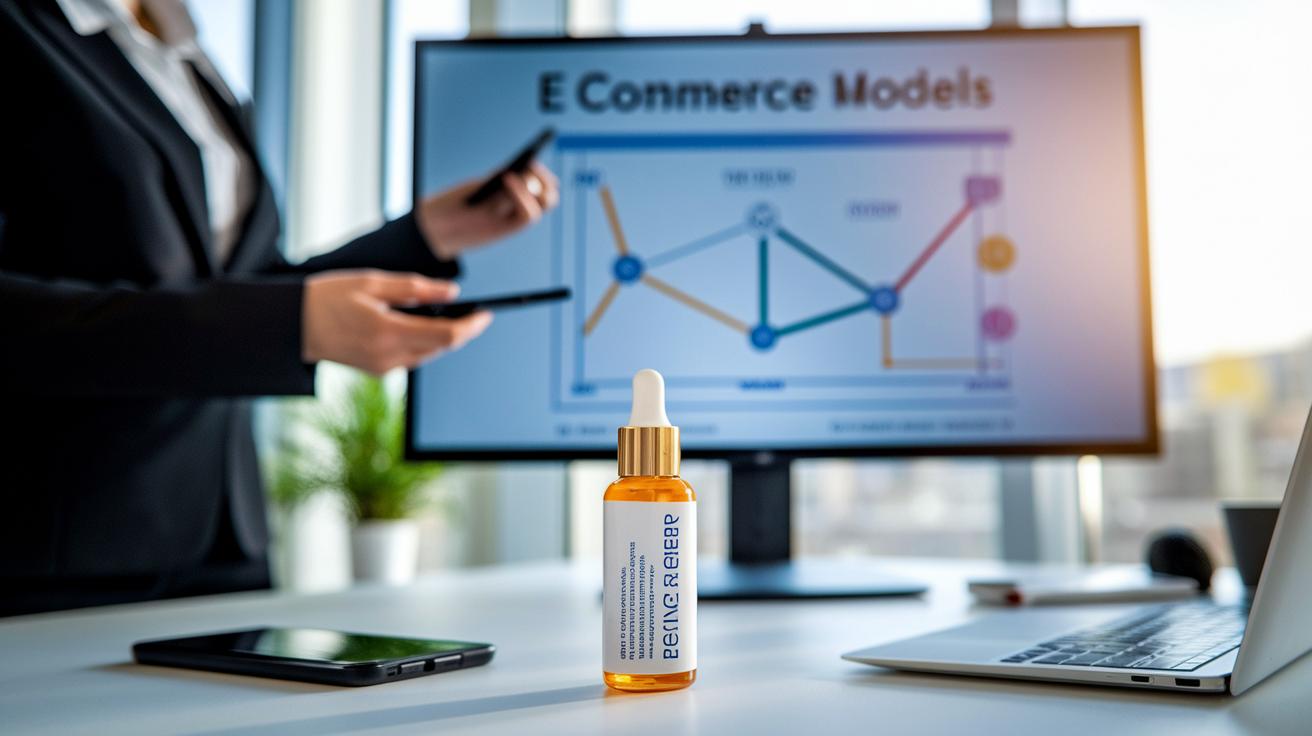
When companies pick an e-commerce model, they look at who their customers are, how well their product fits, and what the competition is up to. Below is a snapshot of different models, each paired with a real-world example.
| Model | Key Focus | Case Example |
|---|---|---|
| B2C | Creating trust with strong branding and personalized service | A skincare brand ramped up its revenue by focusing on targeted marketing. In its early days, a direct approach with customers helped it double its revenue. |
| B2B | Managing bulk orders and contract-based deals | A warehouse supplier landed multi-million-dollar contracts. For more insights on scaling, you can check out the future of b2b ecommerce. |
| C2C | Enabling peer-to-peer sales on online auction platforms | An auction website handled over $10M in transactions by streamlining user interactions. |
| C2B | Allowing individuals to offer their skills and products to companies | A freelance platform successfully onboarded more than 50,000 service providers with its easy-to-use matching system. |
| B2G | Helping vendors win government procurement contracts | An IT solutions firm secured government contracts by meeting strict procurement requirements. |
| C2G | Simplifying processes between citizens and government agencies | A civic portal streamlined public services, making government interactions clearer and more efficient. |
| D2C | Allowing brands to sell directly through their own storefronts and major marketplaces | A mixed strategy kept a brand connected with its customers while also expanding its market reach. |
Across these models, the thread that ties them together is the need to align products with market demands, get to know the audience, and keep costs well-managed.
E-Commerce Examples: Platform Technologies Unpacked

Picking the right platform can really change the game for a growing business. When you choose an architecture that fits your needs, it not only lets you tweak things your way but also handles the heavy lifting as your traffic increases.
SaaS Platforms
SaaS platforms are a go-to for many retailers because they come with cloud hosting and take care of maintenance automatically. Imagine a subscription service that updates itself while you keep your focus on growing your business. It’s like having a tech partner that takes care of the details so you can concentrate on what really matters.
Open Source Platforms
Open source platforms give you full control over the code and let a lively community add extensions as needed. This means developers can tailor every little detail to create a solution that fits your exact needs. With self-hosting options, you get the freedom to build unique functionalities that set your business apart.
Headless Commerce
Headless Commerce is all about flexibility. By separating the front end from the back end using APIs, developers can craft imaginative, custom designs without messing with the core system. It’s a perfect match for brands eager to try out fresh ideas and create standout customer experiences.
Enterprise Solutions
When you need a platform that can handle large numbers of transactions, enterprise solutions have you covered. They come with strong integration capabilities and are designed to work under high demand. With dedicated support teams backing these systems, you can tackle complex integrations and feel secure that your business is protected.
Ultimately, the key is to balance subscription pricing against self-hosted costs, while also considering how easy it is to upgrade along the way. It’s all about making sure your chosen platform fits your current needs and has the potential to grow with you.
Storefront Design Examples in E-Commerce

When it comes to great storefront design, the layout and flow make all the difference. Designers carefully stack elements with clear contrasts so visitors naturally move from one section to the next. Think of intuitive menus, neatly arranged product galleries, and bold call-to-action buttons that gently usher shoppers along. Every detail not only grabs attention but also helps customers glide effortlessly from browsing to buying. And because these layouts are based on real user behavior, even newcomers quickly find what they need. This smart design builds loyalty and ramps up engagement.
Interactive touches bring the experience to life. Imagine 360° product views that let you inspect an item from every angle, almost like holding it in your hands in a real store. Chatbots answer questions in a flash, while custom filters help narrow down options to match your taste. High-resolution demos and AI-powered tips add an extra layer of confidence to every purchase. In short, these dynamic features transform a basic storefront into a memorable destination that stands out in a crowded market.
Emerging E-Commerce Examples: AI, AR, and Mobile Use Cases

Artificial intelligence is rewriting the rules of online shopping. Big platforms now use smart personalization engines that learn from your browsing habits and quickly adjust product recommendations. This simple tweak boosts conversion rates by 20%. And with chat interfaces powered by AI, shoppers get instant support, guiding decisions right up to checkout. Imagine receiving a suggestion for the perfect accessory right when you need it. It’s a subtle change that not only drives sales but also leaves customers feeling truly understood.
Then there’s the rise of augmented reality and mobile apps reshaping how we shop. Picture trying on a pair of sneakers virtually at home; these AR experiences increase engagement by 30% because you can see the products in action before buying. Moreover, insights reveal that 70% of online shopping occurs on mobile apps, driven by billions of active users. This blend of physical interaction and digital ease is letting merchants offer a smooth, interactive shopping experience. In short, AI, AR, and mobile innovations are setting a whole new standard for user-friendly e-commerce.
Final Words
In the action, the article showcased real-world e-commerce examples that set the stage for smarter decision-making. It covered dynamic case studies, diverse business models, innovative platform technologies, and engaging storefront designs.
We saw how a mix of practical insights and actionable data can boost digital sales and customer trust. These e-commerce examples provide a clear roadmap for creating strategies that drive growth and inspire new opportunities. Stay curious and keep sharpening your approach for an even brighter future.