

Ever wondered if smart computer programs could change your investing game? AI is now sifting through huge heaps of data, spotting trends like a trusted guide showing you the best routes on a busy street. This method blends what happened in the past with live, real-time info to offer strategies that are right on time. In this article, we'll look at seven AI-based techniques that can help you choose stocks more wisely. Stick with us and see how these ideas might just give your investment skills a real boost.
How AI Stock Market Analysis Delivers Predictive Insights
AI stock market analysis uses smart tools to predict trends in a way that feels both modern and efficient. It crunches massive amounts of past data, technical signals, and even market sentiment, all powered by machine learning and real-time inputs. This approach handles thousands of data points every second, making it a big upgrade from traditional manual methods. For more details, check out what market analysis is all about at https://omegamarkets.com?p=273.
The process blends digging into historical stock trends with live AI monitoring to create clear, actionable trading signals. Take Zen Ratings, for instance, they use neural network models that have learned from over 20 years of data and 115 factors. This mix has even delivered about 32.52% annual returns for “A” rated stocks. The system keeps refining its predictions, letting investors adjust their strategies based on the latest, real-time insights.
| AI Capability | Description | Investor Benefit |
|---|---|---|
| Predictive Modeling | Uses historical info and smart algorithms to forecast trends | Helps spot opportunities before they happen |
| Real-Time Monitoring | Constantly scans live data for the freshest updates | Keeps you informed during fast market shifts |
| Sentiment Analysis | Breaks down social media and news to sense market mood | Helps anticipate how the market might react |
| Pattern Recognition | Identifies recurring trends and breakout signals | Makes timing entries and exits a lot easier |
By pulling together various data streams, AI stock market analysis gives you a set of clear signals that guide your trading decisions. It lets investors quickly understand complex market trends, reducing uncertainty and speeding up execution. This smart blend of traditional data and modern analytics means you can make adjustments on the fly, trading with a bit more confidence each day.
Key AI Methodologies in Stock Market Forecasting

AI is shaking up stock market analysis by blending past performance data with live input. It uses smart models to sift through huge amounts of information and spot patterns that might slip past a manual review.
- neural networks – Think of these systems like little brains that learn by connecting layers of nodes. They can uncover complex patterns, much like Zen Ratings, which leverages over 20 years of data.
- decision trees – This approach builds a clear, step-by-step guide to making decisions, helping you understand the factors behind each stock.
- support vector machines – This solid method draws boundaries between different market scenarios, capturing those subtle fluctuations that can be easy to miss.
- natural language processing for sentiment analysis – Here, AI reads news and social media posts to decode the market’s mood, showing how investors feel without heavy analysis.
- pattern recognition – Platforms like Tickeron use this technique to spot recurring trends and breakout signals, which are key in pinpointing the right moments to enter or exit a trade.
Choosing the right method really depends on your trading goals. If you’re on the hunt for clear entry signals, pattern recognition offers quick cues about market shifts. But if you’re after a more detailed market view, then neural networks and natural language processing give a complete picture by combining numerical data with overall sentiment. In fact, mixing these methods can help balance speed, precision, and context, making your trading decisions even sharper.
Top AI-Powered Stock Analysis Software Platforms
Today, we’re diving into advanced platforms that blend smart AI insights with easy-to-use designs and fair pricing. These tools combine neural network analysis, real-time scans, and backtesting to give you a trading experience that’s both reliable and straightforward.
Zen Ratings
Zen Ratings relies on a neural network that’s learned from decades of market data, processing over 115 factors to produce key performance scores. With a free plan and a 14-day Premium trial available for just $1, you can explore its robust analysis features without a big commitment. Known for steady annual returns, Zen Ratings offers a flexible subscription that renews at $234 per year, letting you choose the plan that best fits your trading style.
Trade Ideas
Trade Ideas delivers extensive AI scans covering both pre- and post-market conditions, starting at $89 per month. It houses a rich library of trading patterns to help pinpoint timely opportunities. Plus, you can customize the AI settings to match your personal trading style and risk level. For active traders in search of dynamic market insights, Trade Ideas is a strong choice that offers advanced functionality at a competitive price.
TrendSpider
TrendSpider blends automation with technical analysis to streamline your decision-making process. It lets you run backtests and set custom alerts with ease, pricing its services from $99.51 per month. The platform’s AI-driven technical feedback and real-time alert system ensure you’re quickly informed when key market moves occur, making your trading strategy more efficient.
Incite AI
Incite AI stands out by processing thousands of data points every second with its own predictive engine, offering real-time insights that are accessible to everyone. The clean, clear interface makes advanced analytics simple to use, even for newcomers. Remarkably, Incite AI is completely free, drawing both seasoned traders and novices who need immediate, actionable market data.
DanelFin
DanelFin delivers AI-generated price targets through an intuitive, easy-to-navigate interface. With subscription plans ranging from $25 to $70 per month, this platform scales with your needs. It breaks down complex indicators into clear, easy-to-understand scores, appealing to investors looking for smart, straightforward stock insights without any fuss.
Comparing AI Trading Algorithms vs Traditional Techniques

Traditional stock analysis often means painstakingly examining charts by hand and relying on small sets of data. Analysts go through historical price movements one at a time, trusting their own judgment. This method can miss hidden insights buried within huge amounts of information.
AI trading algorithms, however, work differently. They take in many data points all at once, giving a much more detailed picture of market trends. Imagine a smooth dashboard that processes thousands of points in real time, that’s what these systems offer. For instance, Zen Ratings has achieved roughly 32.52% annual returns on top-rated stocks by using neural networks that combine several factors at once. The result? Clear signals on when to buy or sell that work well in fast-paced trading conditions.
Still, there are times when AI might not hit the mark, especially with volatile or low-volume stocks. In unpredictable markets, the algorithms might send signals that don’t fully reflect current risks. That’s when the human touch becomes important. By blending AI recommendations with experienced oversight, traders can adjust strategies to better match the complex market environment.
Case Studies: AI Stock Market Predictions in Action
Zen Ratings took a deep dive into historical data, over 20 years combined with 115 factors, to build a neural network that netted a solid 32.52% return in 2022–2023. It’s like uncovering a secret blueprint hidden in the numbers, showing us that a well-tuned look at the past can light the way forward.
Incite AI, on the other hand, has its finger on the pulse. In March 2023, it sifted through thousands of data points in real time to spot a market dip and send out an alert. Imagine having a friendly guide who lights up just when you need to pivot, swift and clear, it gave traders that crucial heads up.
Tickeron stands out with an impressive 85% accuracy rate in pinpointing end-of-day breakout signals. This means traders get straightforward insights for perfectly timed market entries and exits. Think of it as finding the right moment to slip through a door exactly when it opens, a precise nudge that makes all the difference.
Integrating AI Stock Analysis into Investment Strategies
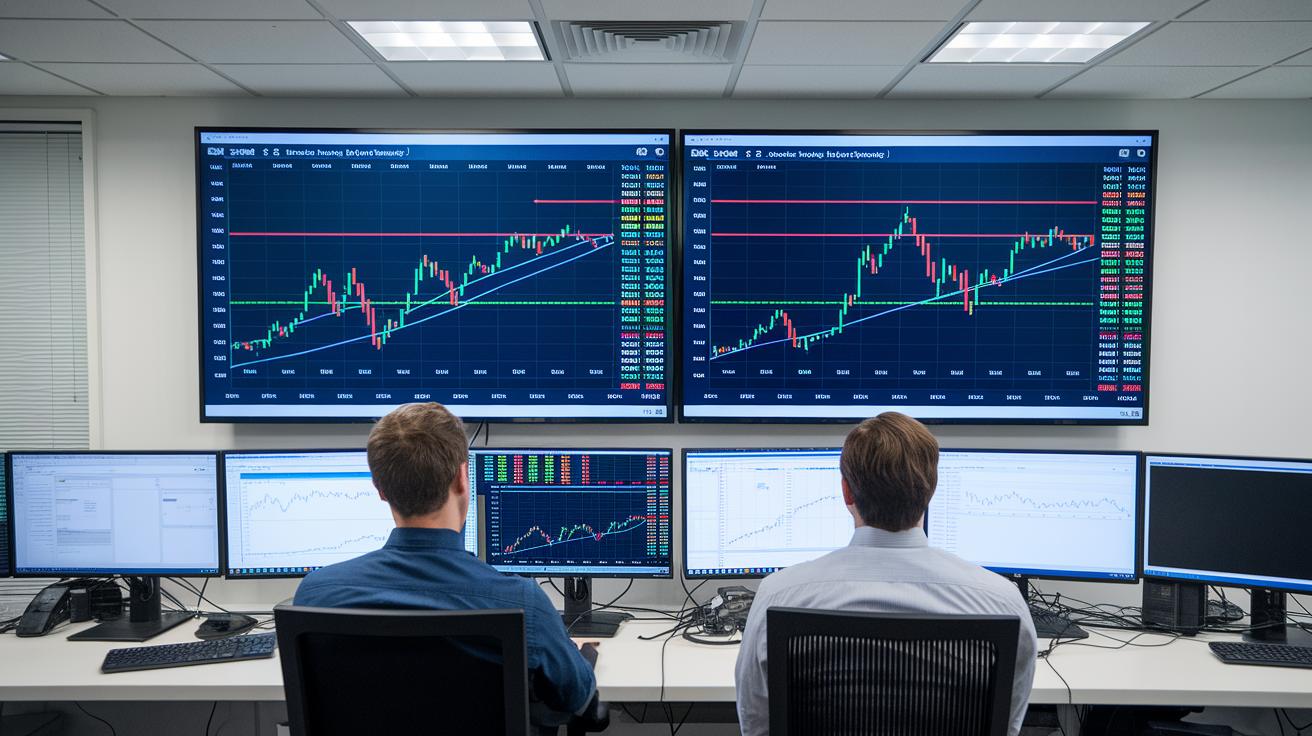
Mixing AI signals with traditional analysis can give your investment strategy a smart balance. Think of it like combining the quick, predictive power of AI with the solid, time-tested methods you already trust. Many investors choose to let AI influence about 60% of their strategy, while sticking to conventional picks for the remaining 40%. This way, you capture sudden market shifts without losing the depth that comes from traditional analysis. And by regularly fine-tuning your models, you keep your insights fresh and in step with today’s trends.
AI risk indicators act like early-warning alarms, signaling when market volatility gets out of hand. Keeping a close eye on these alerts helps you spot potential downturns before they hit your portfolio too hard. Many investors update their models every quarter, ensuring these AI predictions stay relevant and agile enough to navigate rapid market changes. This careful oversight lets you adjust quickly, managing risks while seizing opportunities detected by AI.
Regular reviews and performance tracking, with updates every quarter, keep your overall investment approach both flexible and strong.
Future Trends in AI Stock Market Analysis
Imagine a world where explainable AI sheds light on every prediction. Soon, investors will see exactly how these algorithms arrive at their stock forecasts, making it easier to understand the key market factors driving each forecast. This kind of clarity builds trust and lets you fine-tune your trading decisions with greater confidence.
Next, picture cloud-based dashboards that pull in real-time sentiment, satellite imagery, and other fresh data. These dashboards will blend traditional market data with unconventional sources into one smooth, easy-to-use interface. It’s like having a fast-paced, big-data toolkit right at your fingertips, so you can react quickly as market trends shift.
And then there’s the emerging tech like edge computing and IoT. These innovations empower faster, smarter prediction engines by mixing solid market data with new insights from mobile AI tools. This mix of cutting-edge hardware and inventive software levels the playing field, making powerful, real-time market analysis a standard part of smart investing.
Final Words
in the action, we've explored how AI transforms stock trend insights through historical data, real-time monitoring, and sentiment evaluation. The post covered multiple AI platforms, techniques, and comparisons with classic methods for clearer decision-making. Our discussion highlighted how ai stock market analysis provides actionable signals to guide effective strategies. With these insights, opportunities abound for those ready to embrace data-backed approaches and adapt quickly to market shifts. Stay positive and prepared for the evolving digital marketplace.
FAQ
What free AI stock market analysis tools exist, including free stock pickers and prediction websites?
Free AI tools provide stock market insights using historical data, technical indicators, and sentiment analysis. They offer accessible ways to spot trends, and communities on Reddit often share their experiences with these free resources.
What AI stock market analysis software and apps are available for traders?
AI-based software and apps deliver real-time monitoring and predictive signals by analyzing large amounts of data. They help investors by turning complex market information into actionable insights for better trading decisions.
How do AI tools predict stock market movements and which models excel in stock analysis?
AI models predict stock moves by processing historical performance, technical indicators, and market sentiment. Advanced neural networks and machine learning algorithms work together to generate predictions that guide smarter, more data-driven investment strategies.
Can ChatGPT analyze stock charts for market trends?
ChatGPT focuses on language processing and cannot directly perform chart analysis. For technical analysis, specialized AI platforms use dedicated algorithms to interpret stock charts and deliver market insights.